Showcase
August 11, 2026
Steffen Tomasi Keeps Thinking About the Next Move
# Artificial Intelligence
# Technology
# DataDriven
# Data/IT
# Strategy
# Executives
# Leading visionaries
From AI agents buying print to a homegrown production cockpit delivering real-time visibility, the CEO of Flyerline Schweiz AG keeps asking what could change next — and what his team should do about it.
When Steffen Tomasi thinks about AI, he feels a sense of déjà vu. More than two decades ago, as online commerce began changing how people bought products, he remembers printers insisting their customers would always want to speak with someone and feel the paper before ordering. We know how that story developed. Now, the CEO of Switzerland-based Flyerline Schweiz AG sees another fundamental shift taking shape as AI moves from helping people find information to potentially acting on their behalf.
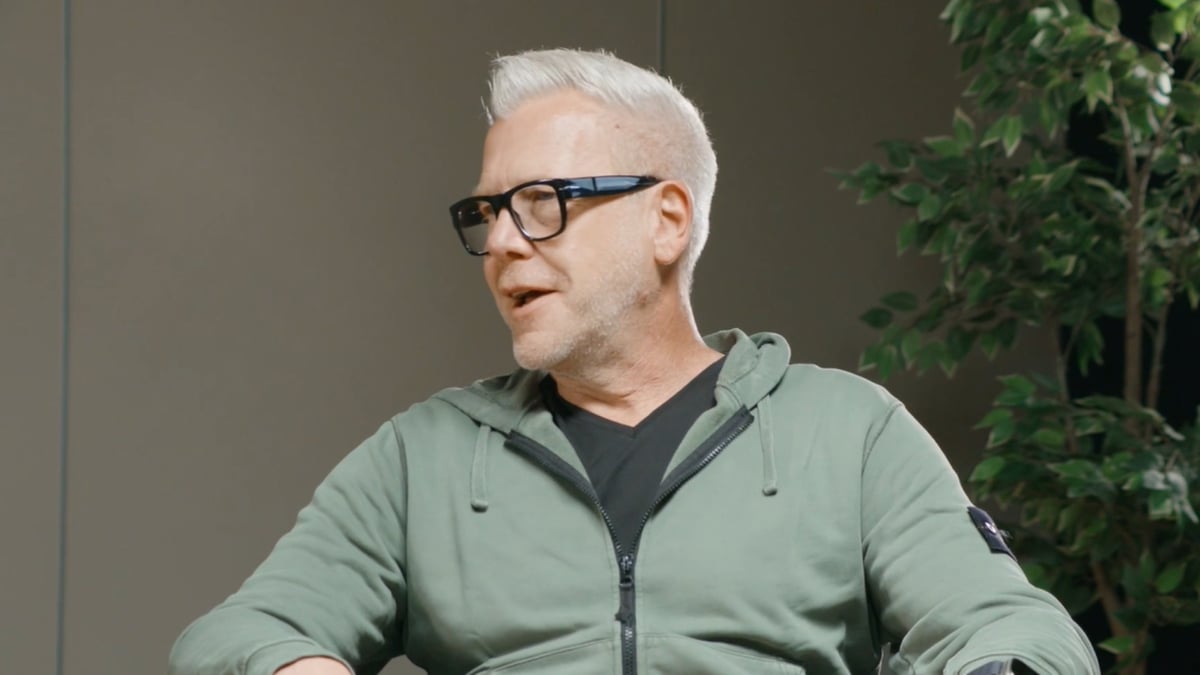
Enjoy this sit-down interview between Steffen (right) and Dscoop Storyteller Darin Painter:
"At first, they don't have to ignore AI," Steffen said during the conversation at Edge Slovenia in Ljubljana. He believes AI agents will eventually help customers design, source and order print and packaging, creating a new kind of buyer that print companies will need to be ready to serve. His conviction comes partly from experience: Before entering print, Steffen worked as a music producer, publisher and DJ, eventually operating five studios before the internet upended that industry. He later sold the business and built Flyerline around the very technology that had disrupted his previous one.
That history helps explain Steffen's appetite for looking around the corner. Flyerline began with standardized products sold online, then expanded its model as larger companies asked for their own standards, workflows and fulfillment processes. Today, Steffen describes the company as wearing "two hats," combining scalable online ordering with highly customized solutions for key accounts. He takes a similarly expansive view of personalization, seeing the opportunity in hyper-personalization that makes printed products and packaging more relevant to the individual receiving them.
Underneath all of it is a quality he values in his team: hunger to understand customers. "We are talking about problems," he said. "We would like to understand our customers: Where are their pain points? Where are their needs?"
Building the "Magic Cockpit"
That instinct to understand a problem and build a better way forward recently produced one of Flyerline's most interesting internal projects. For years, the company accumulated valuable information across SAP, production systems, webshops and other software, but seeing the whole operation required moving among those systems. Steffen and his team began thinking about an architecture that could bring everything together roughly three years ago. Earlier this year, two members of his team began building what Flyerline internally calls its "magic cockpit" — a single place designed to show what is happening across the business:
The cockpit already gives Flyerline real-time visibility into which jobs are in-house, where they are in production and what needs to run on each machine today, tomorrow and beyond. The team can see upcoming material requirements, staffing needs and equipment capacity; when a machine approaches 24 hours of scheduled work, it turns red and gives the team time to respond by shifting work, adjusting schedules, contacting customers or finding outside production support. Customer service can enter an order number and determine whether a job is already on press or whether there is still time to change a file. The goal is earlier, better-informed decisions across the operation.
The foundation for all of this was laid remarkably early. About a year after founding Flyerline, when the company had only a couple of employees, Steffen invested in SAP because the other systems he evaluated could not support the processes the young online-print business needed. People told him he was crazy, he said. More than 20 years later, that decision means Flyerline has a deep history of operational data that can feed the cockpit. "SAP doesn't forget anything," Steffen said, which can help the company anticipate seasonal production demands and staffing requirements instead of simply reacting when capacity becomes tight.
The larger ambition is to connect information that currently lives across multiple systems and make it useful from one place.
The cockpit is still very much a work in progress. It currently connects Flyerline's seven digital printing machines, with the team working step by step to incorporate presses, die cutters, gluing and other analog equipment. Steffen also sees opportunities to connect CRM information, marketing campaigns and eventually mobile access. Marketing teams could watch a newly launched product reach the press in real time and immediately capture content from production. Salespeople could gain a broader view of customer activity. The larger ambition is to connect information that currently lives across multiple systems and make it useful from one place. "It's just the beginning of this cockpit right now," Steffen said.
There is a pattern connecting the cockpit, Steffen's interest in AI and Flyerline's evolution. He tends to look at technology through the problem it might solve rather than the technology itself. When logistics became a challenge in Flyerline's earliest days, he invested in SAP. When customers needed something beyond standardized online print, Flyerline developed customized systems around them. When operational information became scattered across an increasingly complex technology stack, his team started building the cockpit. And now, as AI begins changing how people search, create and buy, he's asking what printers need to build today to participate in that future.
After talking with other Dscoopers about AI, he was struck by their openness to exploring it, especially compared with printers he encounters elsewhere who still dismiss the technology as irrelevant to their businesses. Steffen has heard a similar reaction before:
Always Looking Around the Corner
Steffen's career suggests that his real advantage may be less about predicting exactly what comes next and more about staying curious enough to recognize change early and act on it. He entered print after watching the internet reshape the music business, built Flyerline around a new way of buying print, invested in infrastructure long before he knew exactly how valuable that data would become and continues encouraging his team to solve the problems in front of them while exploring what might be around the corner.
Technology will keep changing, and some of today's ideas will inevitably lead somewhere unexpected. To Steffen, that's all part of the fun. Tere is always another problem to understand, another possibility to explore, and another move to make.
Sign in or Join the community
Innovating Print, Together

Create an account
Innovating Print, Together