EXECUTIVE BOTTOM LINE
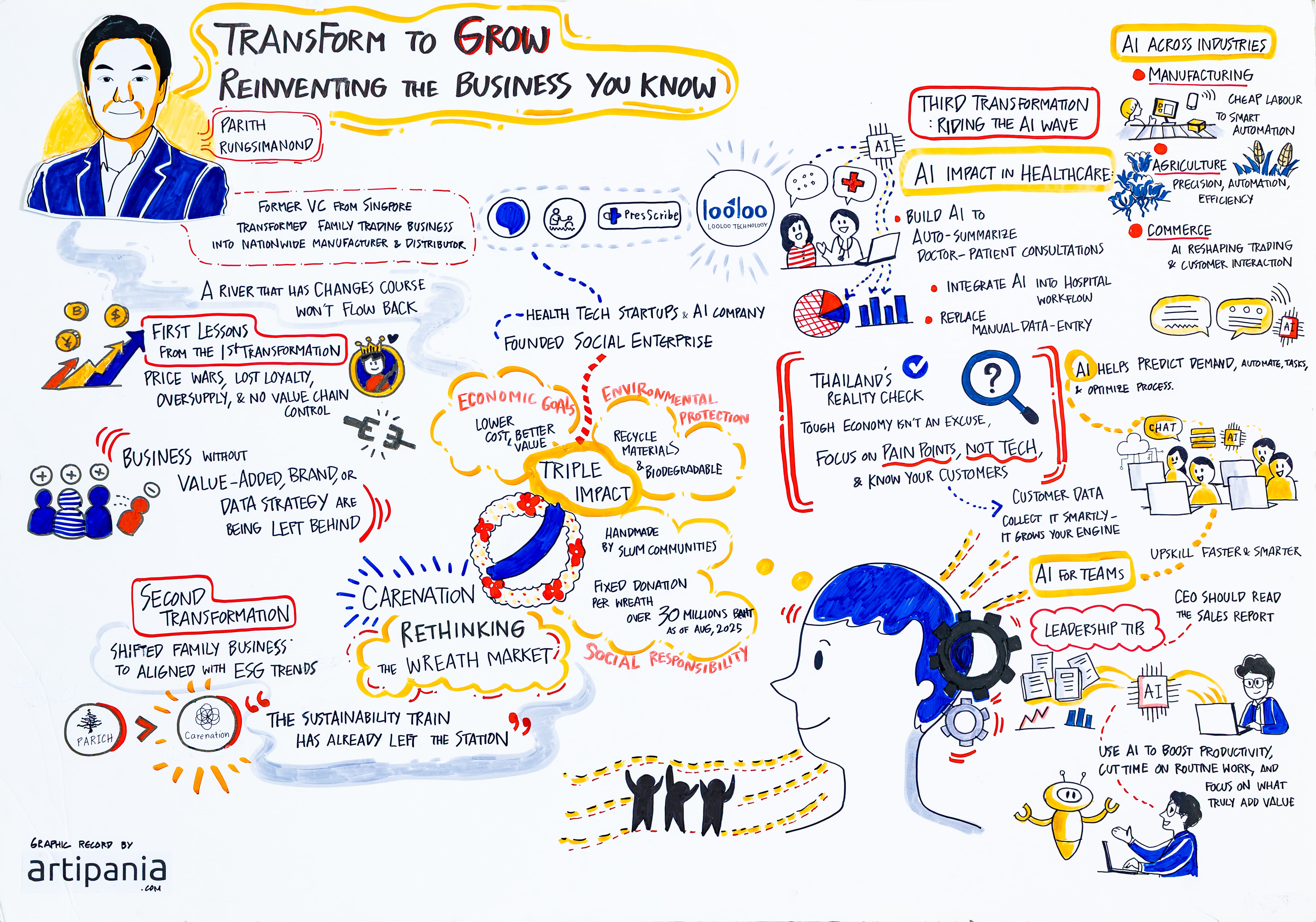
To secure a sustainable competitive edge, print industry leaders must urgently embrace data-driven transformation and AI-powered automation—not just to survive commoditization and shrinking margins, but to unlock new value and growth in a rapidly evolving market.
STRATEGIC CONTEXT
The print and packaging sector faces existential threats from digital disruption, global price competition, and shifting customer expectations. As highlighted in this Dscoop session, companies that proactively leverage technology, data, and innovative business models are outpacing those clinging to legacy practices. The imperative to transform is echoed across Dscoop, with successful firms moving beyond incremental improvements to holistic reinvention.
KEY INSIGHTS
· True transformation requires rethinking the entire business model, not just digitizing existing processes; sustainability and social impact can be powerful differentiators when integrated authentically.
· Data ownership and customer insight are critical: “If you don’t have data, you don’t know where to grow. You have to find a way to collect data.”
· AI and automation are not about replacing workers, but about upskilling teams and amplifying productivity—enabling growth even in contracting markets.
· Predictive analytics, when enriched with external data (e.g., weather, commodity prices, news), drive superior forecasting and inventory management, reducing risk and unlocking new opportunities.
TACTICAL TAKEAWAYS
· Start collecting and properly storing customer data now; even simple membership programs can yield actionable insights.
· Leverage AI tools (e.g., ChatGPT, Gemini) to automate sales script analysis and summarize sales reports, enabling faster, more informed decision-making.
· Redesign products and services around sustainability, using storytelling and social responsibility to command premium pricing and customer loyalty.
· Use predictive analytics to optimize inventory and production, incorporating real-time external data for more accurate demand forecasting.
STRATEGIC IMPLICATIONS
· Companies that own and leverage customer data will control the value chain, strengthening dealer relationships and enabling targeted promotions.
· Integrating AI and automation across operations can transform workforce productivity, allowing growth without layoffs and fostering a culture of continuous improvement.
· Business model innovation—such as shifting from commodity products to branded, sustainable offerings—can create new revenue streams and insulate against price wars.
· Early adoption of data-driven practices positions firms to capitalize on future industry shifts, rather than react defensively.
HIDDEN CONNECTIONS
· The intersection of sustainability and data-driven innovation creates unique market opportunities, especially as regulatory and consumer pressures mount.
· Upskilling the workforce in AI not only boosts productivity but also preserves institutional knowledge and company culture, countering the narrative of automation-driven job loss.
· The same data strategies that drive sales and marketing effectiveness can be repurposed for operational efficiency and risk management, creating compounding benefits.
QUESTIONS TO CONSIDER
· How can your organization accelerate the collection and strategic use of customer data to drive both sales and operational efficiency?
· In what ways can you reimagine your business model to integrate sustainability and social impact as core value propositions?
· What barriers—cultural, technical, or structural—are preventing your teams from fully leveraging AI and automation, and how can they be overcome?
· How might you use predictive analytics not just for forecasting, but for identifying new market segments or product opportunities before competitors do?
NOTABLE STATEMENTS
· “If you don’t have data, you don’t know where to grow. You have to find a way to collect data.”
· “I’m not replacing [workers], but I’m making them better workers… The only way I can compete is making my workforce smarter.”
“Innovation doesn’t mean technology… We change everyday product, where we see the pain point… Find the pain point first and then try to find the AI that fits that pain point.”